

Fixmora
White-label CRM for repair businesses.
The problem
A watchmaker runs repairs on paper and WhatsApp: who brought what, what was promised, when to call back. Agencies would love to sell them software, but can't build and host it.
What I built
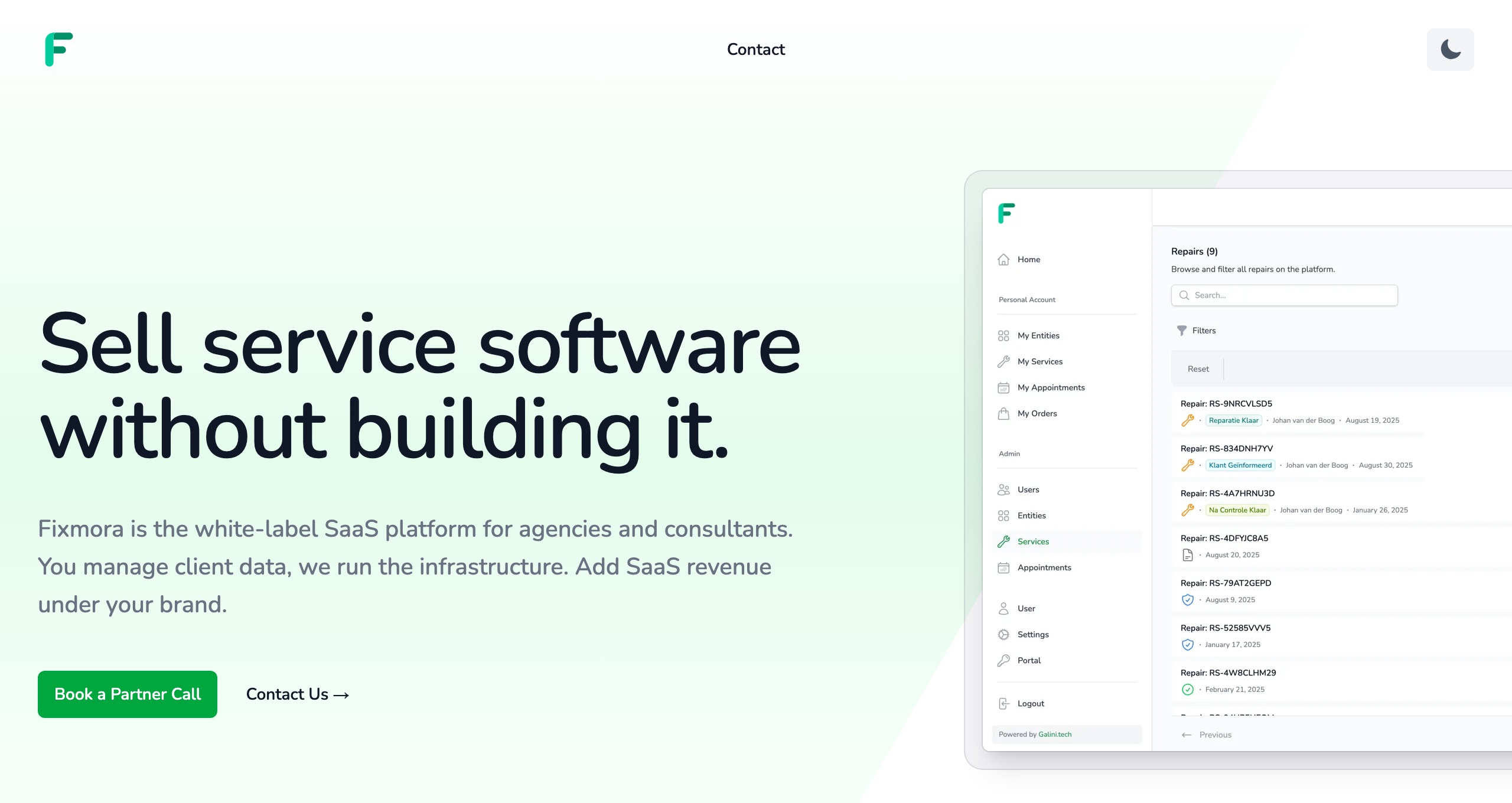
A multi-tenant CRM: repairs with a QR-coded work form, appointments, customers, automated email flows. A partner adds their logo and domain and resells it under their own brand; I ran the infrastructure.
Outcome
Paying clients for three years across about ten tenant domains. The longest-running thing I have built, and the one that taught me to run production alone.
Multi-tenancy is a product decision before it is a database decision. Every feature had to answer: whose data, whose brand, whose bill.what I took from it
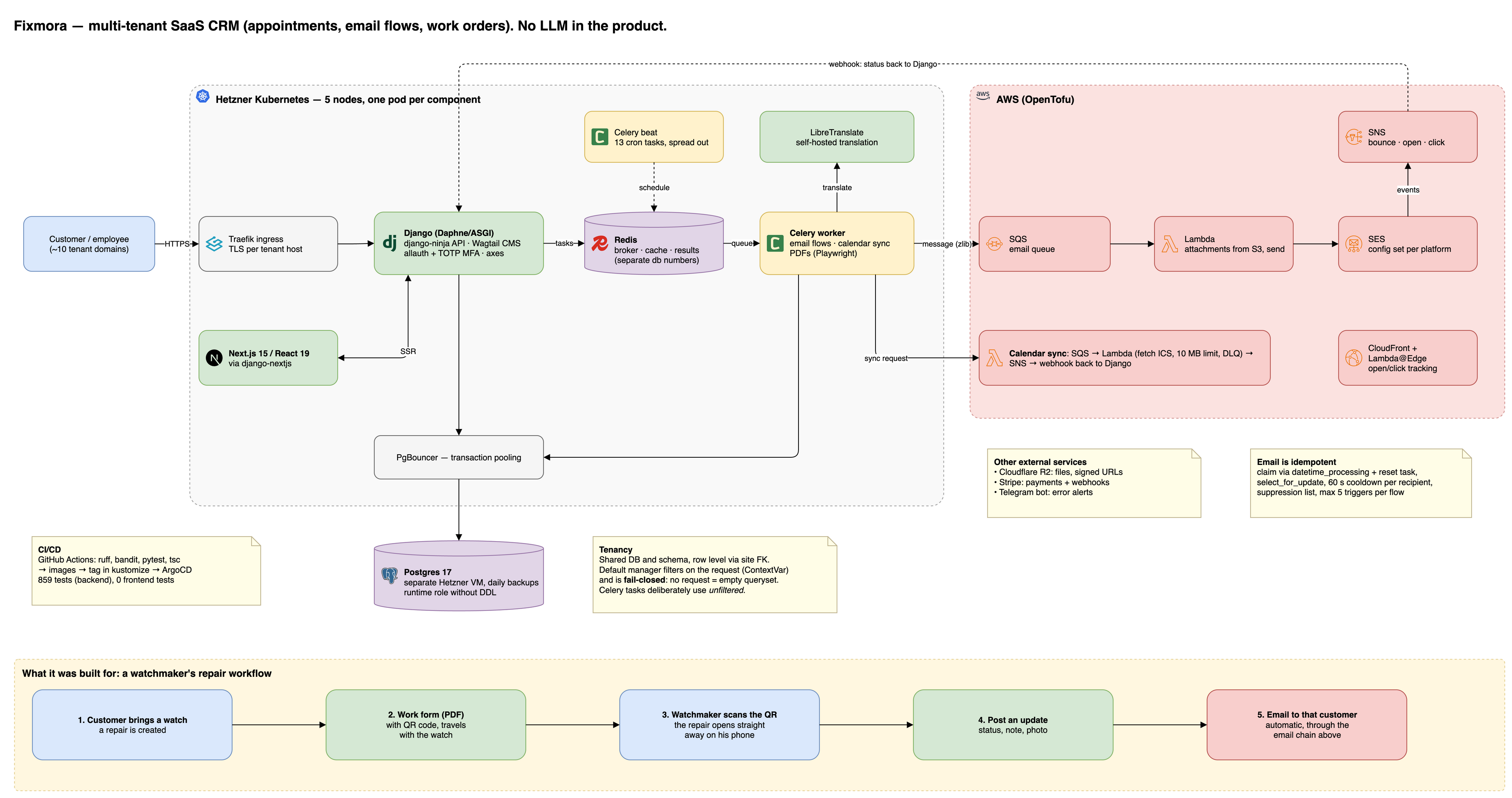
Fixmora architecture and the watchmaker workflow it was built for. Click to open full size
Decisions
- One shared database, row-level tenancy through a site key. The default manager filters on the current request and fails closed.
- Email is idempotent: claims, cooldowns per recipient, a suppression list, a cap per flow. A CRM that double-sends is worse than one that doesn't send.
- Custom domains get TLS on first request through Caddy on-demand mode, after a DNS check by a small service. A partner goes live on their own domain without a ticket to me.
- Marketing pages in Wagtail so partners edit their own copy. Work forms and other PDFs rendered with Playwright from the same templates as the screen, so there is one layout to keep right.
Timeline
- 2023Core CRM, Stripe, forms; first client live by autumn
- 2024Dashboard, maps, subscriptions, Wagtail pages
- 2025Partner model, white-label domains, email flows; moved from Coolify to a self-managed Kubernetes cluster
- 2026Maintenance mode, then offline as the main client winds down