

JudgeMySound and Tringa
A hobby that became my first company: a melody generator, five thousand strangers rating its output, twenty producers, and a classroom of six-year-olds.
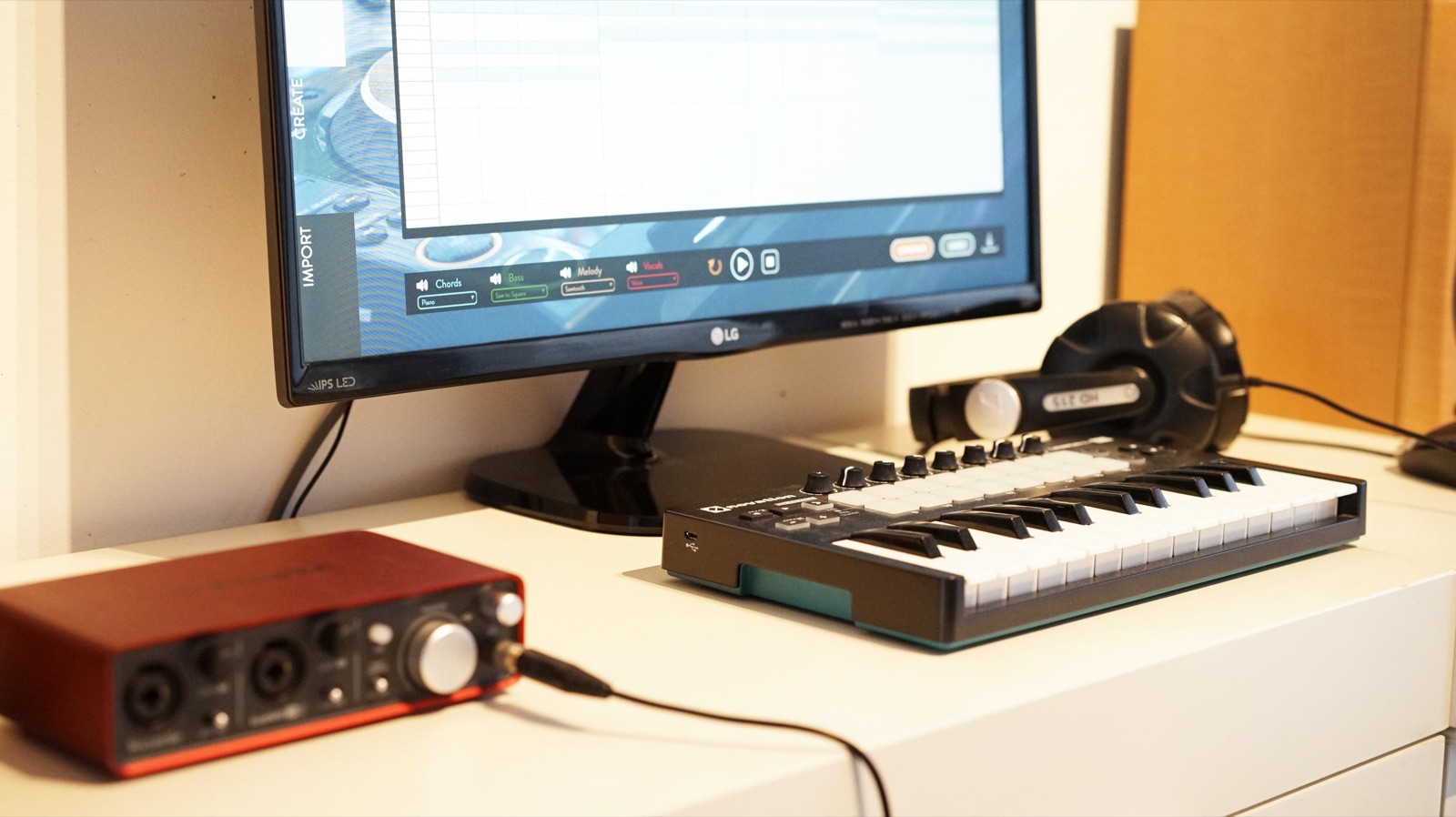
01Looking for a challenge2015 – 2016
It started without any intention of starting a business. I wanted to learn to program, and I was curious whether an algorithm could write melodies. After the basics of MATLAB I read up on music theory and the maths of sound, and wrote a generator that made every choice from statistics. The melodies were decent for a machine. Only a small share was nice to listen to.
To raise that share I needed to know which ones were good. So I built a rating website from scratch and posted it everywhere I could. In two weeks, 10,000 melodies were rated at least five times each by more than 5,000 people. A neural network trained on those ratings, written from scratch with a friend, classified inconsistently. I dropped it and improved the statistics instead.
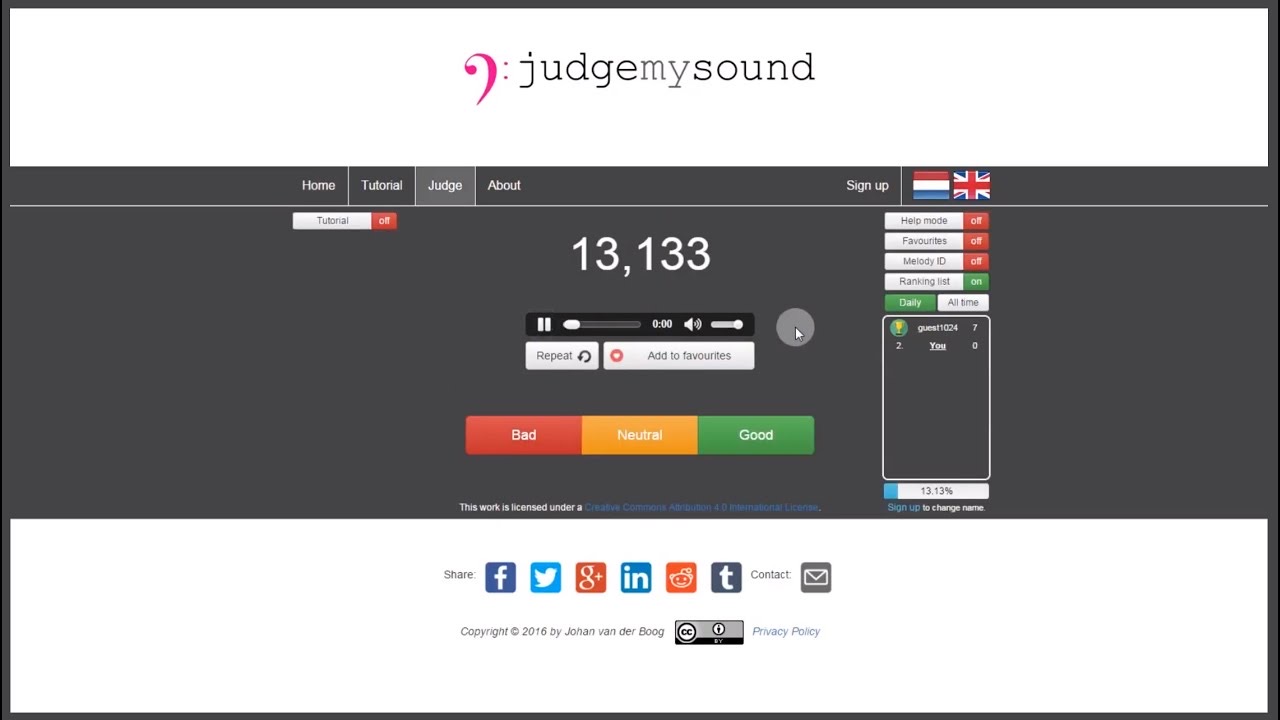
02From hobby to business2016 – 2017
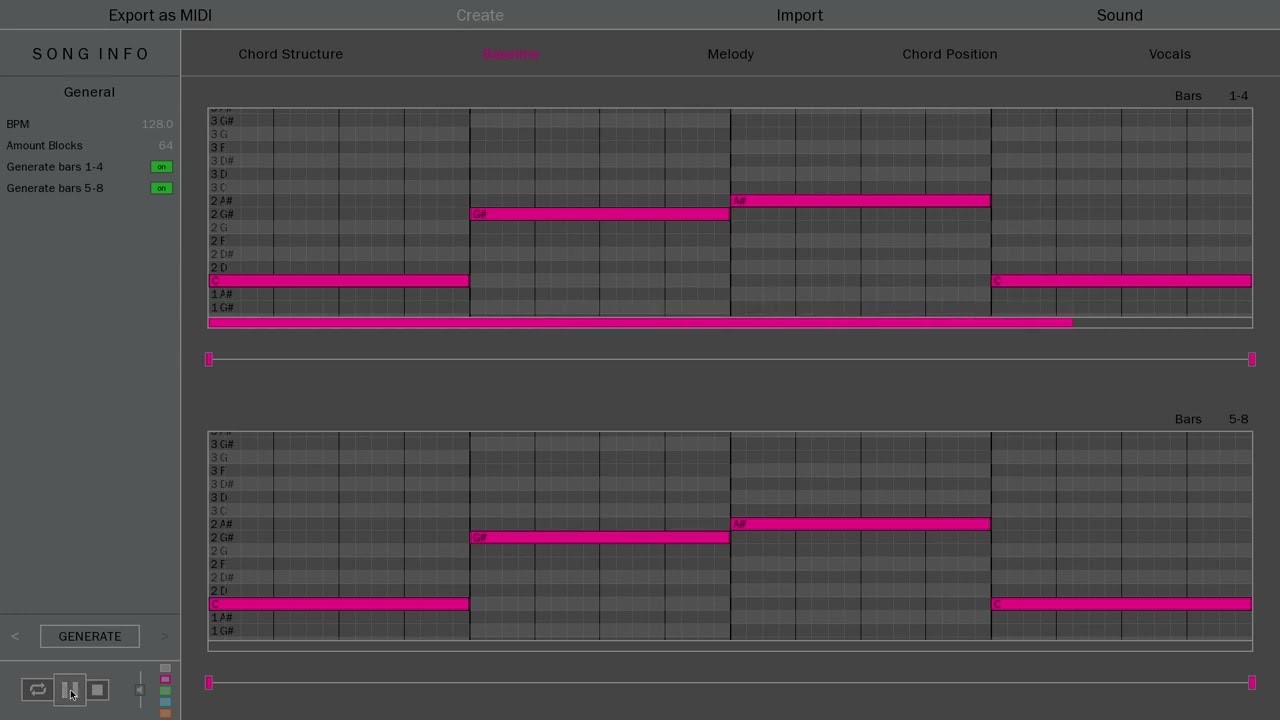
The generator started learning from successful songs instead of chance, and I started asking who could use it. Anyone writing a song starts with an imperfect first version, so I found twenty producers willing to show me their workflow. Many struggled to get anything worthwhile from scratch. Some said they would pay for a tool that sparked ideas.
At TU Delft I turned it into a custom minor: programming courses and a thesis on how the algorithm worked, with mentors to improve it. In February 2017 I demonstrated the Python application. Read the thesis (PDF, Dutch) →
03The final product2017
The producers were impressed and had two objections: the app only ran on my computer, and the bleep sounds had to go, because sound decides whether a melody feels catchy. The answer to both was the web. Custom sounds in JavaScript, the algorithm already in Python, Django as the backend. Months of work later, it ran.
Back to the producers. Impressed again. Not willing to pay. More questions led to the real answer: producers were never the right audience. They are proud of their work, and once a computer has contributed a melody, it no longer feels like theirs.
04Tringa2017 – 2018
Someone from the rowing club, doing a master's in Industrial Design, invited me to a course called Build Your Start-up. A friend joined and the one-man team became three. The course was an eye-opener: engineers want to fix things, designers find a problem and validate it before building anything. JudgeMySound was a product in search of a problem.
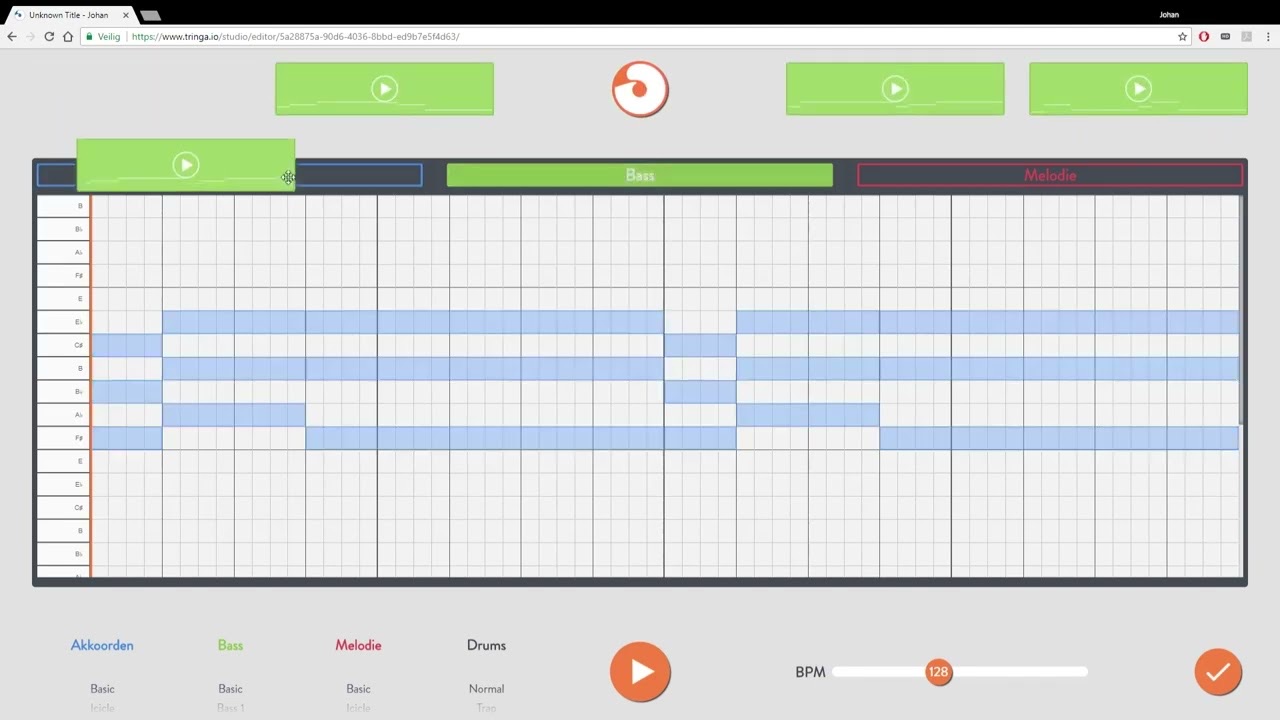
We found one. Dutch primary schools are so pressed by measurable results and administration that music barely gets time, and most teachers do not feel comfortable making music in class. Over a weekend I turned the editor into a child-friendly interface. The kids did not want to stop, and about seventy percent came back to it after school. The model was workshops: we teach the class, the teacher gets an hour back.
Every school we called gave us a class. I gave several paid workshops. But most schools could not afford external workshops at all, and after many attempts we let it go.
05What I took from it
- Intentions are not evidence. People who say they will pay may be saying it to please you. Ask about past behaviour. The Mom Test was gold.
- Markets have timing. It is easier to enter a market that already pays, with something better or cheaper, than to wait for one to be ready.
- Problems first. A product that solves a problem sells. A product looking for its problem rarely does.
Everything I built afterwards, from eLearnScanner to Rekindo, started from these three lines.